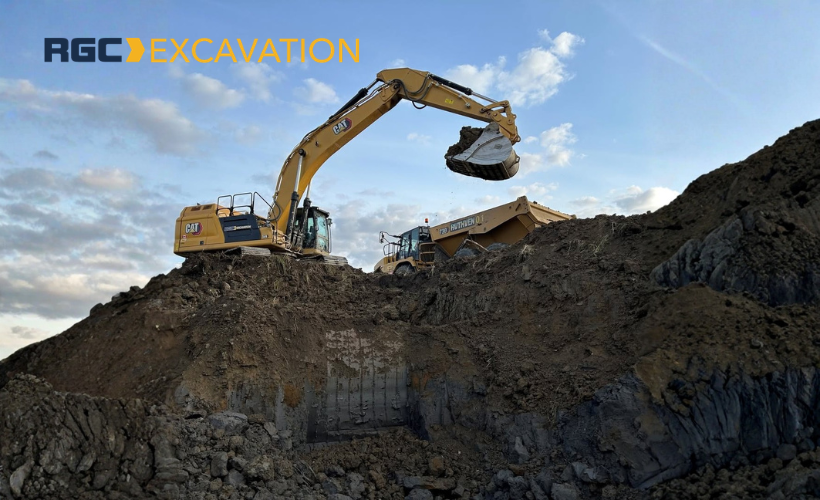
When planning an excavation project in Ontario, every contractor and property owner must meet specific legal requirements before digging begins. Excavation rules in Ontario fall under Ontario Regulation 213/91, which sets safety standards for trenches, protective systems, and worker protection across all construction sites. A separate law, the Ontario Underground Infrastructure Notification System Act requires all excavators to contact Ontario One Call before breaking ground.
For commercial greenhouse growers and agricultural steel building construction in Leamington and Windsor-Essex County, following these rules prevents stop-work orders, enforcement penalties, and project delays. This article explains mandatory utility locates, depth safety thresholds, permit requirements, and excess soil management. These are the key compliance areas for every excavation project in the region.
Why Ontario Excavation Rules Exist
Trench work is dangerous. Cave-ins occur on small jobs as often as on large commercial projects. Small jobs of short duration, like utility connections, sewer repairs, or foundation patches carry the same collapse risk as major builds. A single cubic metre of soil weighs over 1,600 kilograms. A trench failure can kill a worker in seconds, so work safety is paramount.
Ontario’s excavation rules address these risks with clear safety requirements and permit processes that apply to every contractor and property owner. For agricultural businesses looking to build new greenhouse structures in Windsor-Essex County, these rules cover foundation excavations, draining and trench systems, utility connections, and site grading. Knowing which requirements apply before work begins keeps a project on schedule and avoids serious financial consequences.
Step 1 — Contact Ontario One Call Before You Dig
Ontario One Call is the mandatory first step for all excavation work in Ontario, no matter how large or small the project. Contractors must submit a locate request before any digging starts. This notifies underground infrastructure owners, including gas lines, water mains, electrical cables, and telecom utilities. They will come out to mark the subsurface location (spray paint & flag markers) of their lines and areas to be avoided when digging. The service is free, and locates are valid for 30 days from the date of completion.
Under O. Reg. 213/91 Section 228, employers must confirm that all services are located and marked before excavation begins. If a service poses a hazard, it must be shut off and disconnected first. If disconnection is not possible, the service owner must supervise its uncovering during the dig. Complete regulatory details are available through Ontario.ca.
A May 2024 update under Regulation 136/24 added new rules for large excavation sites for projects covering two or more properties, or sites without a municipal address. These projects must now be submitted as an Advanced Request, giving underground infrastructure owners 10 business days to complete locates. This change directly affects commercial greenhouse and agricultural projects where excavation often crosses multiple land parcels.
Excavation Depth Limits and Protective Systems
The depth thresholds in O. Reg. 213/91 are some of the most important rules on any dig site. The key number is 1.2 metres (about 4 feet). Once a trench reaches this depth, protective systems become legally required.
The 1.2 Metre Rule
Before any protective method is selected, a competent person must determine the soil type and evaluate site conditions. No worker may enter a trench deeper than 1.2 metres unless the walls are made of solid rock, properly sloped, shored, or protected by a trench box. Ontario accepts four protective methods: sloping (angling the trench walls away from the dig), benching (cutting horizontal steps into the trench walls), shoring (bracing the walls with structural supports), or installing a pre-fabricated trench box or hydraulic system. The competent person is also responsible for ensuring safe access for all workers entering the trench.
Rules for Deeper Trenches
The requirements become stricter as depth increases. The Ontario Building Code also requires all excavation work to prevent damage to adjacent structures throughout every phase of construction. Key thresholds to know:
- Spoils piles must stay at least 1 metre from the trench edge at all depths to prevent surcharge collapse.
- Trenches deeper than 2.4 metres require ladders within 7.5 metres of every worker and a fall protection barrier at least 1.1 metres high at the trench edge.
- Trenches deeper than 6 metres must be designed by a licensed professional engineer.
- A Notice of Trench Work must be submitted and communicated to the joint health and safety committee or health and safety representative for any trench deeper than 1.2 metres that workers may enter.
These rules apply to greenhouse foundation trenches, utility installations, and site grading across Windsor-Essex County agricultural properties.

When You Need an Excavation Permit in Ontario
Utility locates and permits are two separate requirements. Formal approval for excavation comes from the local municipal building department. The type of permit required depends on the scope and location of the project.
Permits are typically required when excavation involves any of the following:
- Foundation work for a greenhouse, steel building, or commercial structure
- Sewer, water, or utility connection work
- Drainage work that changes site elevation, affects a culvert, or crosses a roadway
- Work near property lines or within a municipal road allowance
- Demolition of an existing structure before new construction begins
For greenhouse and agricultural projects in Leamington and Windsor-Essex County, the permit process also requires demonstrating compliance with the Ontario Building Code, covering soil bearing capacity, frost depth, and structural loads. Ruthven Greenhouse Construction handles the permit process for clients, working directly with local authorities so projects stay on schedule.
Excess Soil: What Happens to Excavated Material
Ontario Regulation 406/19 controls how excavated soil is managed once it leaves a project site. This applies to all construction projects that produce excess soil, including commercial greenhouse and agricultural builds.
Soil reused within the original project area does not require documentation. Once soil is removed from the site, it must be classified, tracked, and taken to an approved destination. Project leaders must keep all records for at least seven years. Truck drivers hauling excess soil must carry a record showing the project location, soil quantity, destination site, and vehicle plate numbers.
On large greenhouse projects in Leamington, where foundation and drainage excavations move significant volumes of soil, on-site reuse is evaluated first. Managing excess soil properly under Reg. 406/19 is a standard part of running an efficient project.
Excavation in Windsor-Essex County: Local Conditions Matter
Windsor-Essex County has specific ground conditions that every professional excavation team must plan around. The region’s clay-heavy soils hold moisture and shift with the seasons, which affects trench stability and compaction throughout the project. Frost depth requirements also determine how deep greenhouse footings need to go, and accurate excavation at the foundation stage prevents settlement and avoids expensive corrections later.
Ruthven Greenhouse Construction works as an experienced excavation contractor across the greenhouse and agricultural sector in Windsor-Essex County. The same team that designs the foundation also manages site preparation, utility locates, and permit applications which eliminates the miscommunication between trades that causes delays and cost overruns. Additional guidance on construction safety requirements in Ontario is published through ontario.ca.
Get Your Next Project Done Right
Excavation rules in Ontario apply at every stage from the first locate request to the final site inspection. Proper excavation on greenhouse and agricultural projects in Windsor-Essex County requires accurate coordination across utility locates, depth safety systems, municipal requirements, and soil management. Skipping any step creates real legal and financial risk, including fines, project shutdowns, and costly repairs.
Ruthven Greenhouse Construction delivers professional excavation services that meet every compliance requirement from start to finish. Our in-house team covers site preparation, excavation, footings, and structural construction giving your project one point of contact instead of multiple contractors.

Contact us today to discuss your next excavation project in Leamington and Windsor-Essex County and we can help manage the entire project from first dig to completion.
Share This Article
Choose Your Platform: Facebook Twitter Google Plus Linkedin