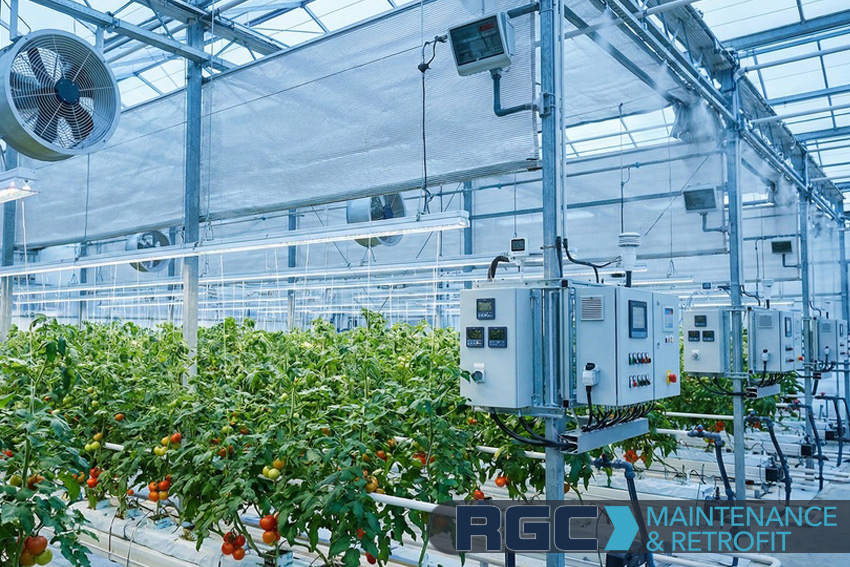
Greenhouse energy efficiency decides how much revenue a grower keeps through the heating season. Heating and power make up the largest energy cost in most Ontario greenhouse operations. Commercial greenhouses use energy around the clock for heating, lighting, and ventilation through the coldest months. Greenhouse heating runs hardest when outdoor temperatures drop.
A structure that leaks heat forces the boiler to burn more natural gas to keep the same growing temperature. Ruthven Greenhouse Construction helps vegetable growers and other greenhouse operations across Leamington, Kingsville, and Windsor-Essex County cut energy costs through better structures and targeted retrofits.
Where a Commercial Greenhouse Loses Energy
Heat escapes a greenhouse through four main paths and increases operational energy use. Understanding each one helps greenhouse growers spend retrofit money where it returns the most.
The glazing surface is the largest single path. A single layer of glass or poly transfers heat quickly to the outside air. Acres of roof area multiply that loss. Aging cladding makes the problem worse. Seals fail, panels shift, and gaps open along the ridge and gutters.
Air leakage is the second path, and it often goes unmeasured. Cold air enters through worn vent seals, damaged door gaskets, and holes or cracks at the sidewall. Each leak pulls warm air out and drops the temperature near the crop. Growers then raise the setpoint, which burns more fuel. Sealing these gaps is the fastest way to reduce heat loss.
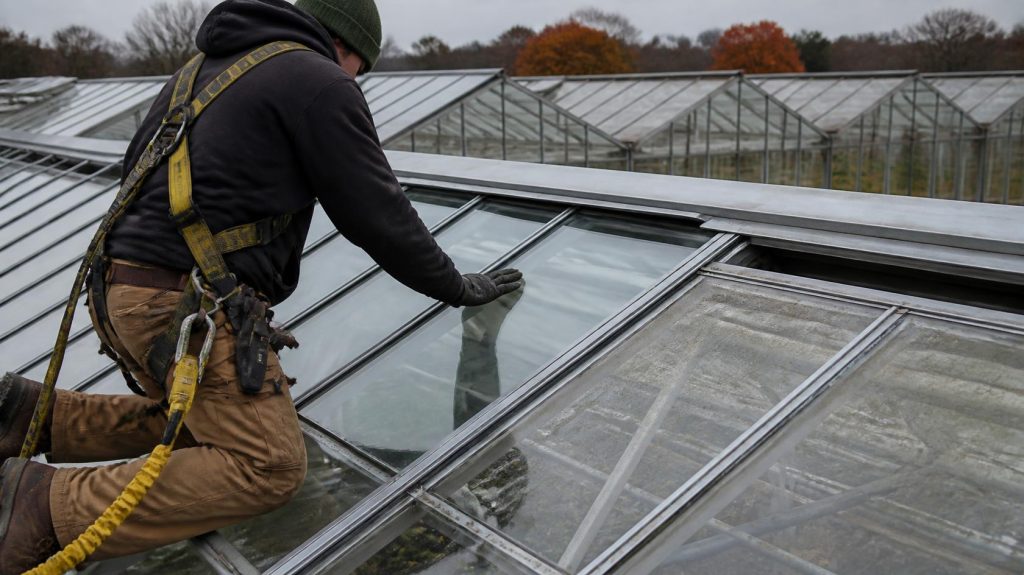
The perimeter is the third path. Heat moves down into the soil and out through the foundation edge. An uninsulated perimeter of the greenhouse lets heat escape straight into the surrounding soil. Wet soil has high thermal conductivity, so it pulls heat away faster than dry soil.
Ventilation is the fourth path. Humidity control requires venting, and venting removes heat with the moisture. High humidity levels force more venting than the crop needs. This imbalance is common in greenhouses running older controls.
Retrofit Upgrades That Reduce Consumption
Most existing ranges in Windsor-Essex can improve without new construction. The right upgrade can help farms save on energy, but it depends on the age and condition of the structure.
Thermal screens deliver the fastest return for most growers. A retractable screen closes at night and traps warm air below it. The greenhouse then uses less energy to hold its temperature through the winter months. The same system cuts daytime light load in summer. Our guide to greenhouse shade curtains covers how these systems work in a commercial range.
Cladding replacement addresses both heat loss and light transmission. Old glazing scatters light and reduces the energy reaching the crop. New panels restore that light and seal the envelope, which makes the structure more energy efficient. The signs of failing panels appear well before full replacement becomes necessary. Our article on when to replace greenhouse cladding explains what to watch for.
Energy-efficient LED lighting cuts electricity draw compared with high-pressure sodium fixtures. Growers who upgrade the lighting also lower waste heat. A heating system may need more capacity once that waste heat disappears. Growers switching to LED should review heating capacity at the same time, especially the types of crops that are growing year-round.
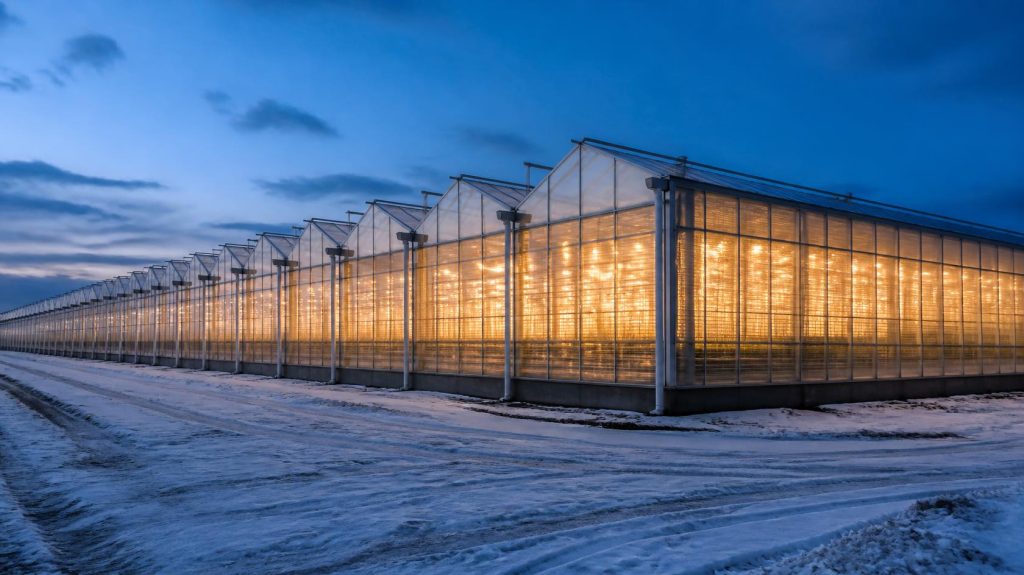
Heat pumps give growers an energy-efficient heating option for the coldest months. A high-efficiency unit moves heat rather than burning fuel to make it. Replacing an aging boiler with a higher efficiency model lowers consumption across the season. One system then covers heating and cooling.
Sealing work costs less than any other upgrade on this list. Vent seals, door gaskets, and sidewall closures wear out on a predictable cycle. Crews also seal the fans and their shutters to stop drafts when the fans sit idle. A dirty fan can lose as much as 20 percent of its airflow, so crews clean the fans each season. A properly sized fan in good operating order moves more air for less power.
Control systems tie the other upgrades together. A modern greenhouse’s control system adjusts screens, vents, and heating in response to live conditions rather than fixed schedules. Ruthven Greenhouse Construction handles this work through our maintenance and retrofit services, and our retrofit solutions in Leamington page outlines the process.
The upgrades below help efficiency within your greenhouse and give the strongest return in a typical Windsor-Essex range:
- Retractable thermal screens that close at night to hold warm air below the roof line
- Vent seal and gasket replacement across the full structure, including doors and fans
- Insulation board added at the foundation edge to insulate the perimeter
- Cladding replacement on any section showing reduced light transmission, fogging, or failed edge seals
- Climate controls that adjust screens, vents, and heat from live inside and outside readings
- Humidity management that reduces how often the range must vent warm air out to stay dry inside
Government Funding Support Available to Ontario Growers
Ontario greenhouse growers can offset part of the cost of an efficiency project. A provincial energy incentive program pays part of the price of an Energy Management Information System, or EMIS. An EMIS is software that tracks how a facility is using energy in real time. It shows growers where energy conservation will save the most.
The current incentive structure works as follows:
- Facilities that use 400,000 GJ or less per year can receive up to $50,000 toward an EMIS
- Facilities that use more than that each year may qualify for up to $250,000
- Incentives cover up to 50 percent of eligible project costs
- Funding runs until March 31, 2027
The program advises finishing approved projects by the end of 2026. Growers planning a larger retrofit should confirm current program terms first, since eligibility rules change.
An EMIS pays off most when the building envelope is sound. Measuring consumption in a leaking structure identifies the problem but does not solve it. A careful energy assessment ranks the physical upgrades before any money is spent.
Monitoring data also strengthens future applications. Documented savings from improving energy performance support the next funding request. That record supports reducing energy costs and lower operating costs year over year. An on-farm energy review sets the baseline for that work.
Why the Foundation Affects Your Heating Bill
Energy performance starts below grade. This connection gets missed because foundation work happens years before a grower reviews a heating fuel invoice.
A perimeter foundation poured to the correct depth blocks heat migration into surrounding soil. Proper insulation at that edge stops a cold bridge from forming. Correct site grading moves water away from the structure, which keeps the surrounding soil drier. Dry soil conducts less heat than saturated soil, so drainage affects thermal performance directly.
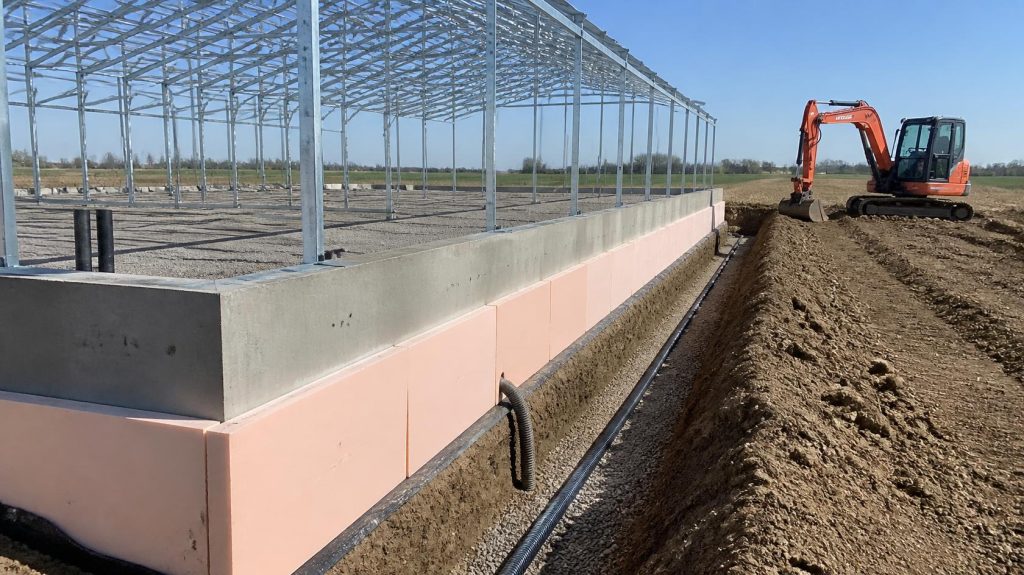
Settlement creates a second problem. A foundation that moves unevenly pulls the frame out of alignment. Glazing panels shift, seals separate, and air leaks appear along the gutters. Poor perimeter work then raises the cost of heating for the life of the building.
Ruthven Greenhouse Construction handles excavation, footings and foundations, and structural work under one contractor. Nothing gets subcontracted out. The crew placing the foundation understands the loads the finished structure requires. Our water management guidance explains how drainage design supports the same goal.
Planning a Retrofit Around Your Growing Season
Timing determines how much production a retrofit costs you. Most efficiency work needs access to sections of the range, which takes those bays out of production.
Greenhouse operators get the best outcome by planning during the season before the work happens. Growers heat greenhouses hardest from December through February, so the shoulder seasons are the time to upgrade. An assessment during operation shows how the building performs throughout the winter.
Phased work keeps a facility producing. A large range can be upgraded in sections across several shoulder seasons rather than shut down at once. This approach spreads capital cost across several budget years.
Some retrofits trigger permit requirements. Structural changes, foundation work, and certain mechanical upgrades fall under municipal review in Windsor-Essex. Our guide to commercial building permits covers how that process runs. Permit timelines add weeks to a schedule, so a contractor who handles this step removes the delay.
Improve Your Energy Performance with Ruthven Greenhouse Construction
Greenhouse energy efficiency improves through structures built and maintained correctly from the ground up. Ruthven Greenhouse Construction has served greenhouse growers across Leamington, Kingsville, and Windsor-Essex County for more than 25 years.

We build energy-efficient commercial greenhouse structures and retrofit existing ranges to improve energy efficiency through Ontario winters. Call our team at 519-326-3959 or contact us to schedule an assessment of your facility.
Share This Article
Choose Your Platform: Facebook Twitter Google Plus Linkedin